Class: Mammals
Order: Artiodactyla
Family: Bovidae; Sub-family: Antilopinae
Genus and species: Gazella dorcas
English Name: Dorcas gazelle; Arabic Name: Ghazel Ahmar
Description, habitats and behaviors
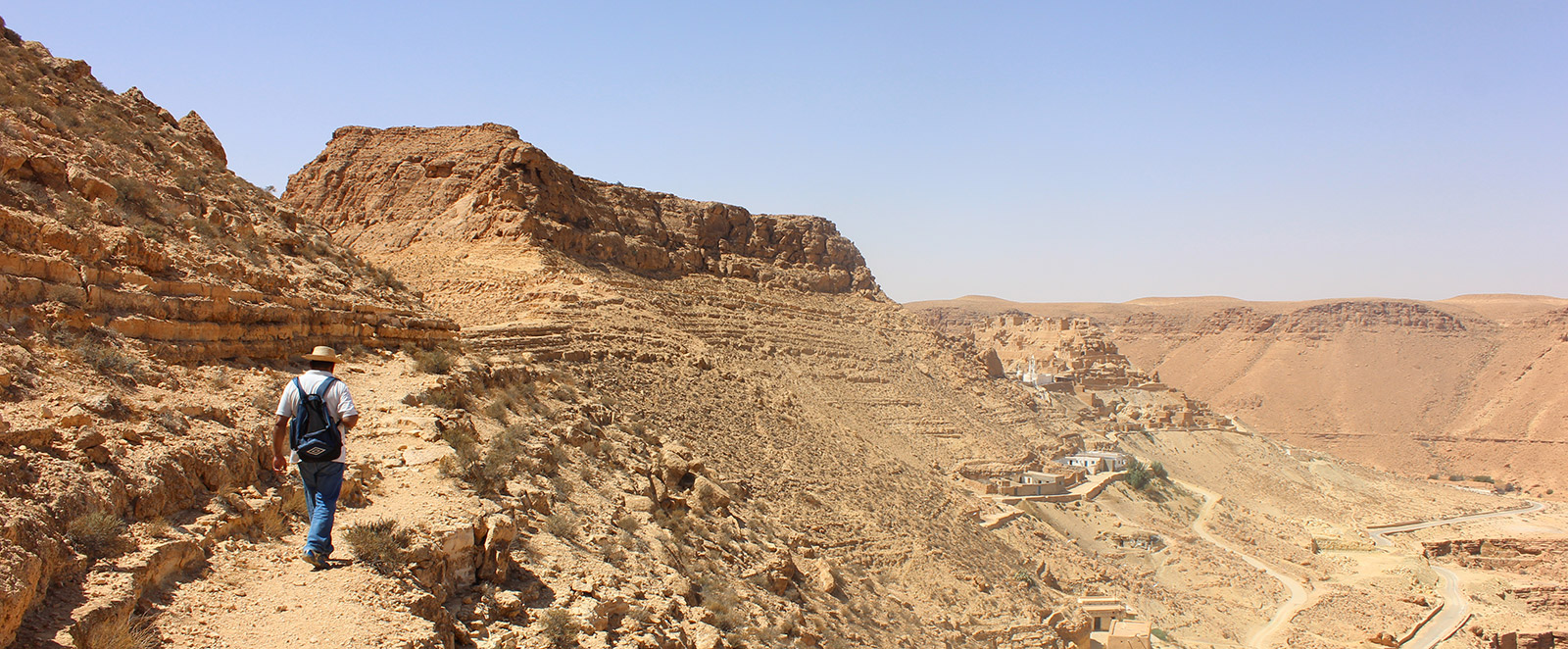
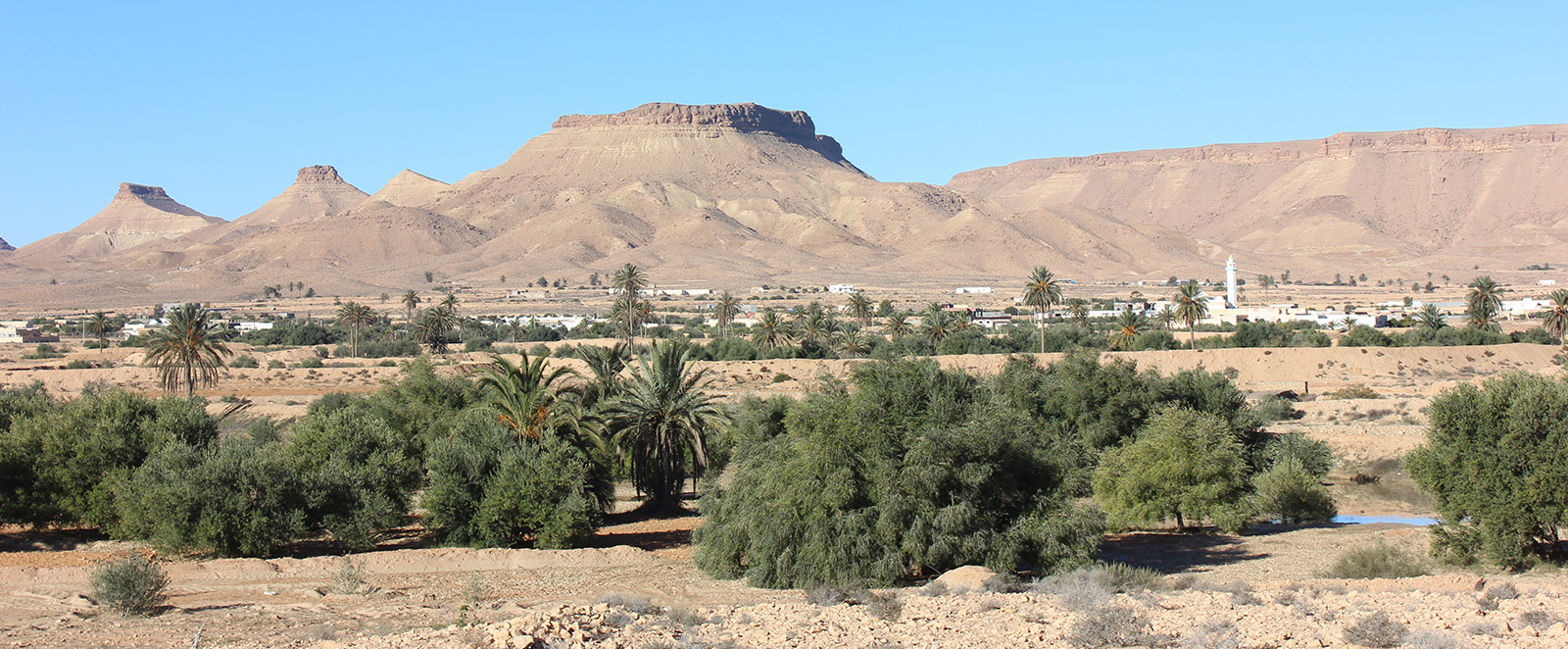
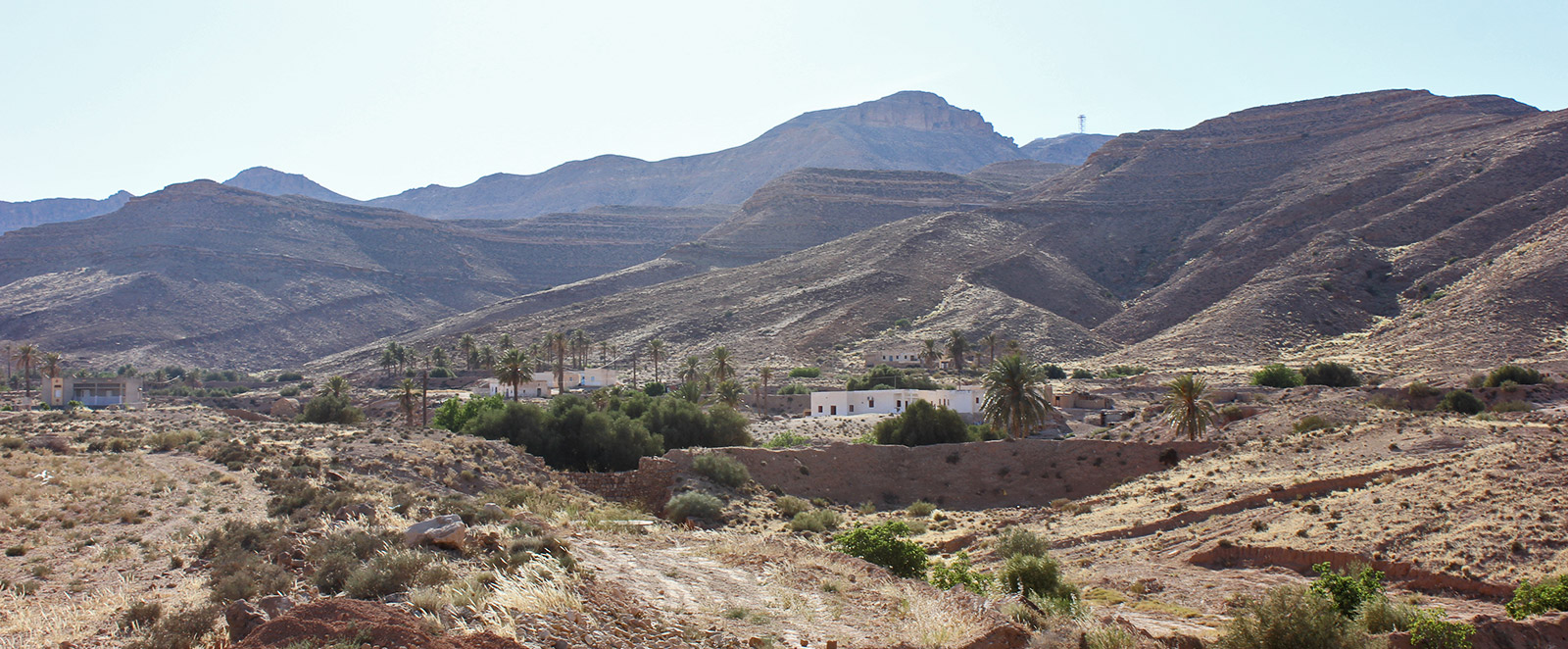
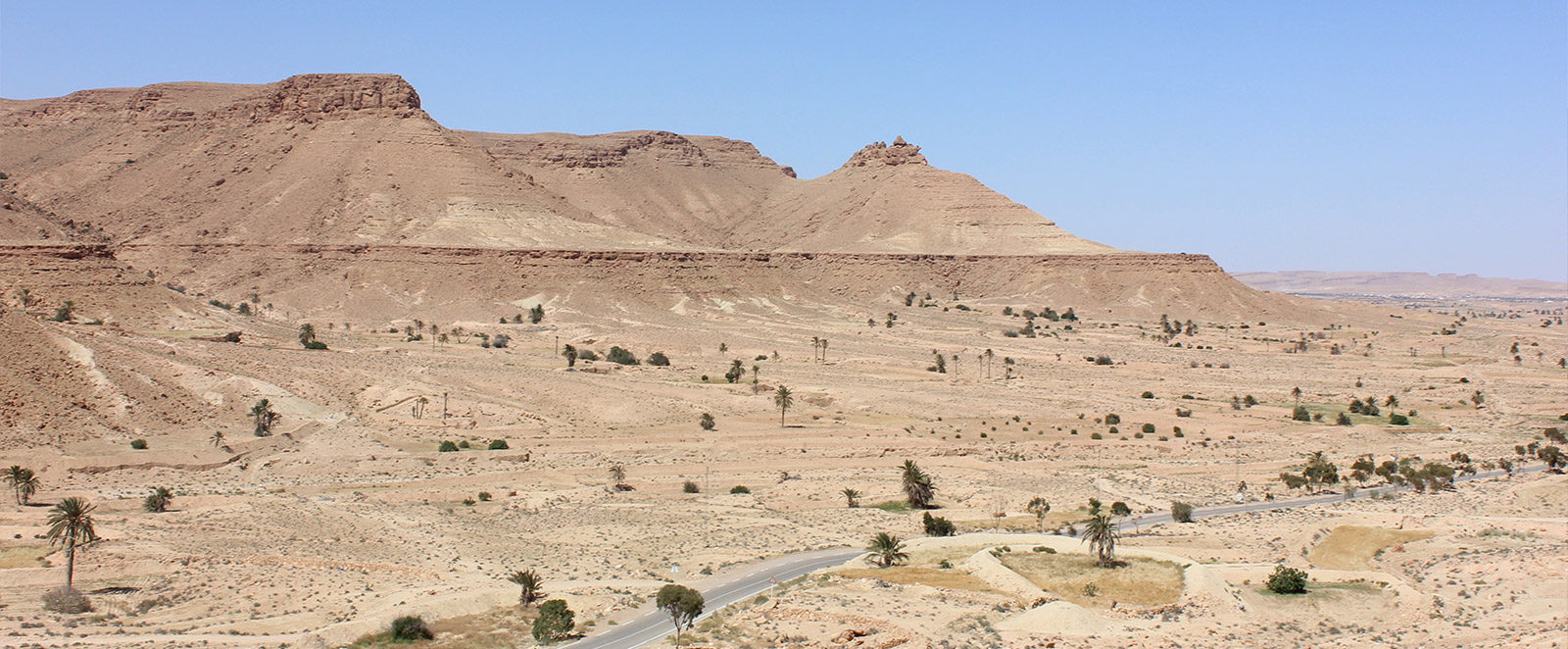
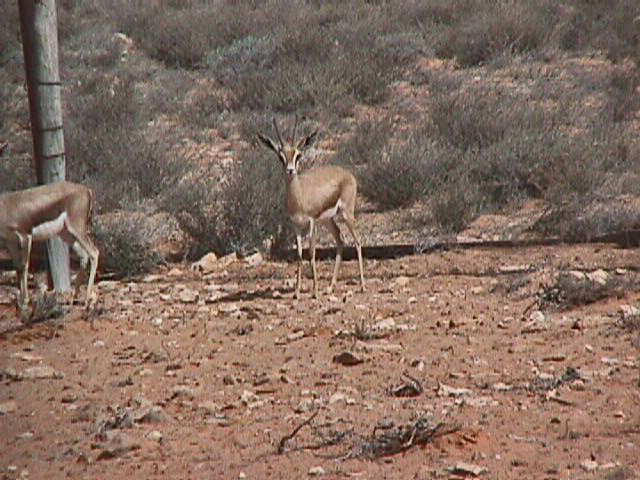
The Dorcas Gazelle is a small ungulate with a slender body, long thin legs, long neck, elongated muzzle, and pointed ears. It measures 90 to 110 cm in length and between 53 and 97 cm in height at the withers for a maximum weight of 12 to 25 kg. Its fur color is pale sand-fawn with slight darker bands focused at the bottom of the flanks; the belly and rump are white, and the tail is black. The Dorcas Gazelle is the most ubiquitous of the Sahelo-Saharan antelopes and enjoys great ecological plasticity. It frequents very varied environments including large sandy, stony, and pebbly steppes and wadi beds. Dorcas gazelles live in family groups of 2 to about fifteen individuals. The gazelle feeds on various grasses and shrubs.
Status in the world and in the region
The Dorcas Gazelle is listed in the "Vulnerable" (VU) category, according to the IUCN Red List criteria. In Tunisia, according to the National Registry of Wild Species (REGNES), the species is classified as Endangered (EN) throughout the Tunisian territory. This species formerly lived in the region and nearby areas but is becoming increasingly rare. However, it is not excluded that a few gazelles still remain. Indeed, it has long been a favorite game animal particularly targeted by local and foreign poachers. Habitat degradation and competition with domestic livestock also constitute pressing problems.