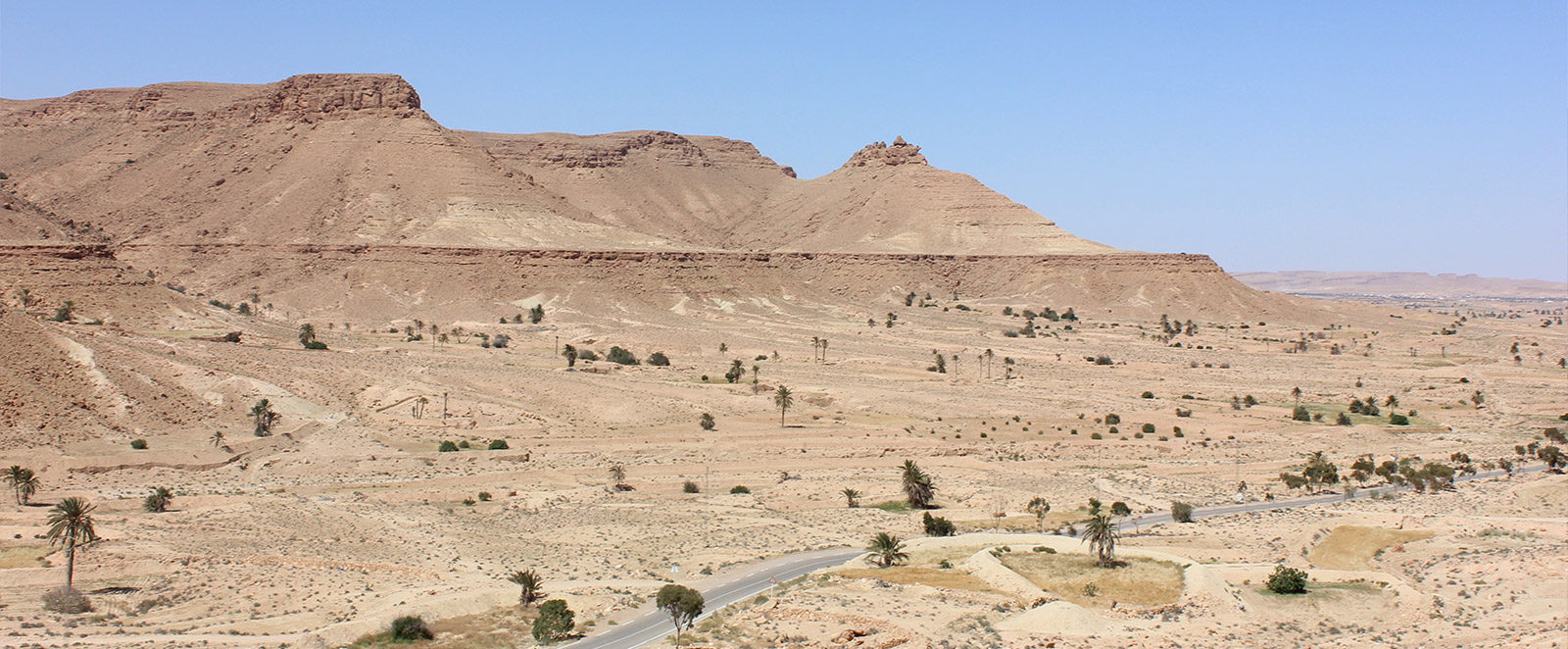
South-East Tunisian at the end of the 19th century
Sociopolitical Organization of Tribal Society
Tribal society in South-East Tunisia, due to its distance from the capital Tunis—the country’s political center—only drew the attention of the Beys during tax collection seasons or when the Beylical family traveled to Tripoli or for the pilgrimage to Mecca. Noting the insecurity prevailing in the Tuniso-Tripolitanian Jeffara following an expedition to Tripoli, Mourad Bey decided in 1673 to build a surveillance Bordj (fort) in the current city of Ben Guerdane. Initially inhabited by the Nouail and later—in 1770—by the Touazines, it was chosen by the French colonial administration in 1894 as a military post and occupied by a Maghzen detachment.
One of the legislative resources of tribal society in South-East Tunisia was the "Hilf El Fdhoul" or "Pact of the Virtuous" (in 1837), which organized the sociopolitical and "institutional" aspects (legislative, judicial, and executive) both within and between tribes of the Ouerghema confederation.
This pact was ratified at a time when the colonization process of Algerian territory had begun (1830) and a rapprochement was observed between the Regency of Tunis and France. During this period, France continuously supported the Beys of Tunis in their quest for independence from Ottoman tutelage—moving from the status of a Turkish regency ("Iyeleh tounissieh") to that of a kingdom ("Memlekeh tounissieh").
In a letter addressed to M. Tissot, Ambassador of the French Republic in Constantinople, dated April 18, 1881, M. Barthélemy-Saint-Hilaire, Minister of Foreign Affairs, explained to his diplomatic auxiliary France’s historical non-recognition of any Ottoman territorial sovereignty over the Regency of Tunis. He stated that since the establishment of the Husseinite dynasty (by Hussein Bey in 1705), "the independence of the Beys of Tunis has been affirmed by the uninterrupted possession of the throne, by the conclusion of treaties with almost all the powers of Europe, and by the refusal of the Sublime Porte to receive any claims relating to the plundering of Tunisian corsairs." He continues in this missive: "King Louis XV in 1742, the National Convention on 6 Prairial Year III, the Restoration Government in 1824, the July Monarchy in 1830 and 1832, and Emperor Napoleon III in 1861, all treated with the Beys of Tunis as with princes exercising sovereign power in its fullness."