• IMG 8423
  • IMG 3299
  • IMG 8647
  • IMG 7369 zoom
  • IMG 6213

La flore

Posted in The flora

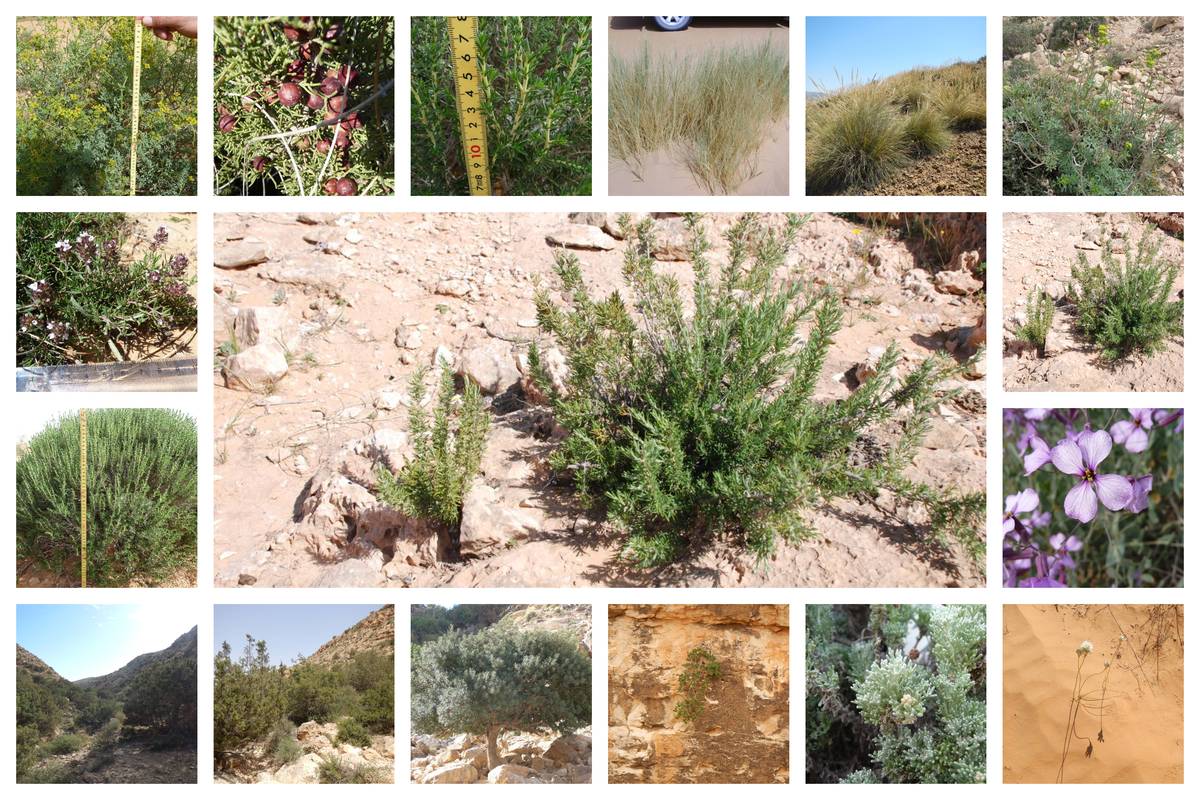
plants collage

Prepared by: Dr. Mohamed Tarhouni, Researcher at IRA Medenine


The vegetation cover of the territory includes cultivated plants, the most dominant being olive trees, fig trees, date palms, peach trees, apricot trees, almond trees, pomegranate trees, prickly pear trees... and spontaneous plants.

The natural vegetation of the region is very diverse, especially in the mountainous zone where hundreds of herbaceous and woody species can be found during rainy years. There is also a remarkable richness in spontaneous species with multiple uses (pastoral, aromatic, medicinal, ornamental...).

In the following, we will present a detailed description of fifteen characteristic species of the territory. These species were selected primarily based on:

  • Perennial plants (always present) that are more or less dominant and characteristic of the region
  • Plants known or easily identifiable by different users
  • Specificity of uses and/or treatment of certain diseases
  • Plants highly sought after by the local population due to their multiple uses
  • Melliferous species (honey-producing)
  • Certain species that are rare or endangered and require immediate protection.
Halfa

Posted in The flora

Scientific name: Stipa tenacissima L.
Family: Gramineae
Vernacular name: Halfa

Biological and ecological characteristics: It is a very robust perennial plant that presents in dense annual clumps (0.5 to 1 m). Its leaves are long, smooth, and rolled. The roots are superficial and highly branched. The flower stalks are long (30 to 50 cm). Seed germination is rare under natural conditions. The species multiplies vegetatively (clump splitting). The clump grows slowly and hollows out at the center, forming a crown that fragments to give rise to new clumps. Although indifferent to soil texture, the plant prefers loose, filtering, permeable, or sloping soils. It is also indifferent to the chemical nature of the soil (siliceous, calcareous, or slightly gypseous).

Location: The entire mountainous zone.

Usage: The flower stalk is appreciated by animals. The leaves are harvested (plucked with a stick) for various uses (crafts, industry, fodder...).

Status: Stable

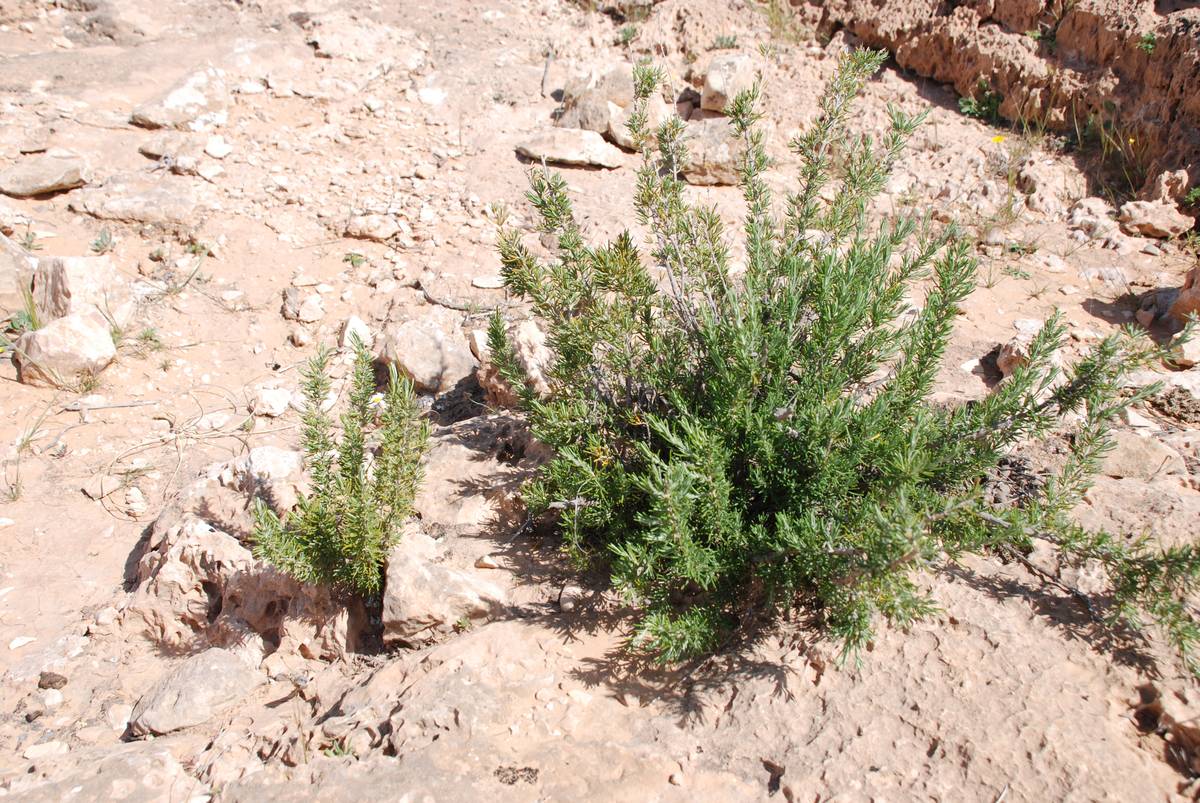
Klil

Posted in The flora

Scientific name: Rosmarinus officinalis L.
Synonyms: Rosmarinus laxiflorus De Noé
Family: Labiatae
Vernacular name: Klil

Rosmarinus officinalis L.Rosmarinus officinalis - Photo by Mohamed Tarhouni

Jderi

Posted in The flora

Scientific name: Rhus tripartitum (Ucria) Grande
Synonyms: Rhamnus tripartitus Ucria / Rhus oxycanthoides Dum. / Rhus ziziphina Tineo.
Family: Anacardiaceae
Vernacular name: Jderi

Biological and ecological characteristics: Dioecious shrub, branched and very thorny, with serrated glaucous green leaves. White-yellowish flowers appear in cluster inflorescences during spring. The fruit is a red drupe, turning yellow when ripe (early summer).

Location: It is a degradation species of the Aleppo Pine forest and is found throughout the mountain range (from Matmata to Mechiguig in the deep south).

Usage: The most common use of this species is the consumption of the fruits, especially in the dried state when their taste becomes sweeter. Also noteworthy is the use of the bark for tanning and the wood for charcoal production.

Status: Under degradation

Hellab

Posted in The flora

Scientific name: Periploca angustifolia Labill.
Synonyms: Periploca laevigata Ait.
Family: Asclepiadaceae
Vernacular name: Hellab

<Photos from google.com>

Biological and ecological characteristics: It is a plant with an upright habit, climbing/twining, and evergreen foliage. It grows on skeletal soils. It flowers between March and June and produces a large quantity of seeds in the absence of grazing. When subjected to excessive grazing, the plant acquires a prostrate habit, with very tangled branches and foliage that is difficult for livestock to access. Multiplication is generally done by seeding.

Location: It is considered a forest relic and is found throughout the mountain range (from Matmata to Dhehiba).

Usage:

  • Excellent pastoral species
  • Its solidified resin is used as a masticatory (chewing gum)
  • Its leaves can be used to prepare a type of herbal tea
  • Anti-diabetic (fruit powder)
  • Hypotensive (Roots).

Status: Under degradation

Kabbar

Posted in The flora

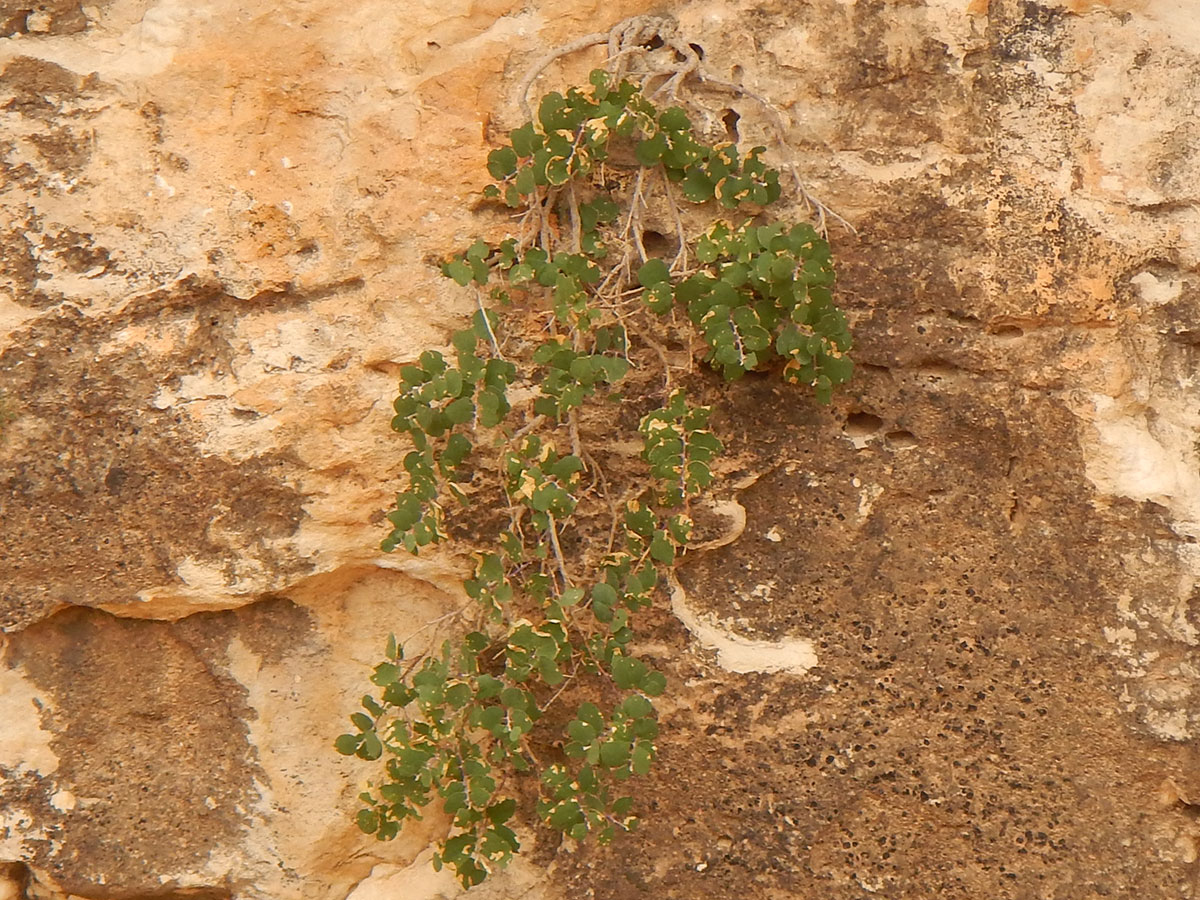
Scientific name: Capparis spinosa L.
Synonyms: Capparis leucophylla D.C.
Family: Capparaceae
Vernacular name: Kabbar

Capparis spinosa L. - Photo by Mohamed TarhouniCapparis spinosa L. - Photo by Mohamed Tarhouni


Biological and ecological characteristics: A small shrub with a bushy, ascending, or spreading habit, which can exceed 80 cm in length. Its leaves are broad and have a semi-fleshy appearance. The flowers appear during spring and are white-mauve in color. The stamens are characterized by long filaments. The fruit is a black berry.

Location: This plant is observed on mountainous massifs (on rocks). Due to high human pressure on the caper plant, its abundance is most noticeable on the ridges of the Jbels.

Usage: A species with multiple therapeutic virtues and widely consumed by humans. Its flower buds serve as a condiment for various culinary specialties.

Status: Under degradation

NOTICE

 Site visitors are advised that data entry for the GMG project is still in progress, so some pages may still be incomplete. We apologize for the inconvenience. 

PROJECT PARTENAIRES

  • Autonomous Region of Sardegna
    Autonomous Region of Sardinia (Italy)
    Project Funding Organization
  • ASECON Association Amici Senza Confini
    ASECON (Italy)
    Association "Friends Without Borders"
  • ONM National Mining Office
    ONM (Tunisia)
    National Mining Office
  • CNR National Research Council
    CNR (Italy)
    National Research Council
  • PGSA-SAR Historical and Environmental Geomineral Park of Sardinia
    PGSA SAR. (Italy)
    Historical and Environmental Geomineral Park of Sardinia
  • Municipality of Masullas
    Municipality of Masullas (Italy)
    Province of Oristano
    Region of Sardinia
  • Municipality of Gadoni
    Municipality of Gadoni (Italy)
    Province of Nuoro
    Region of Sardinia
  • Friends of Sardinia ONLUS
    Municipality of Gadoni (Italy)
    Province of Nuoro
    Region of Sardinia