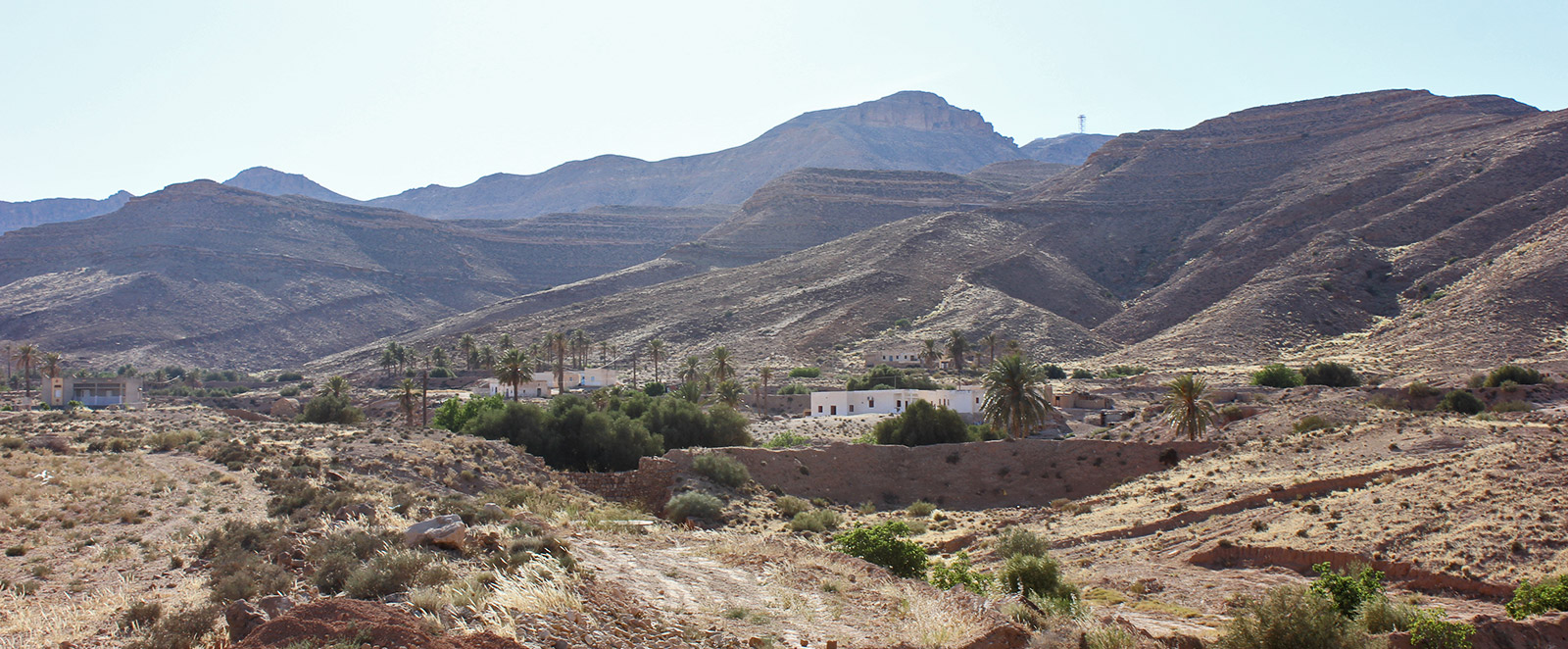
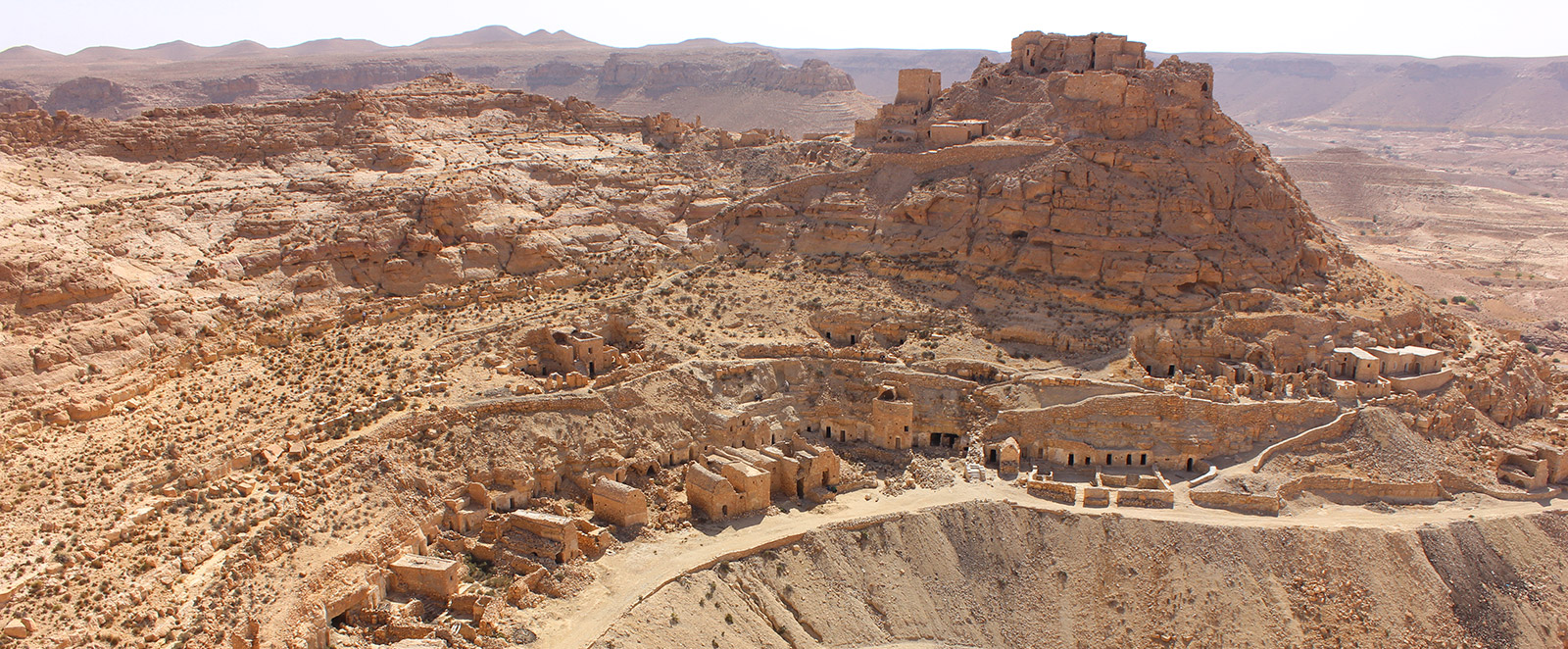
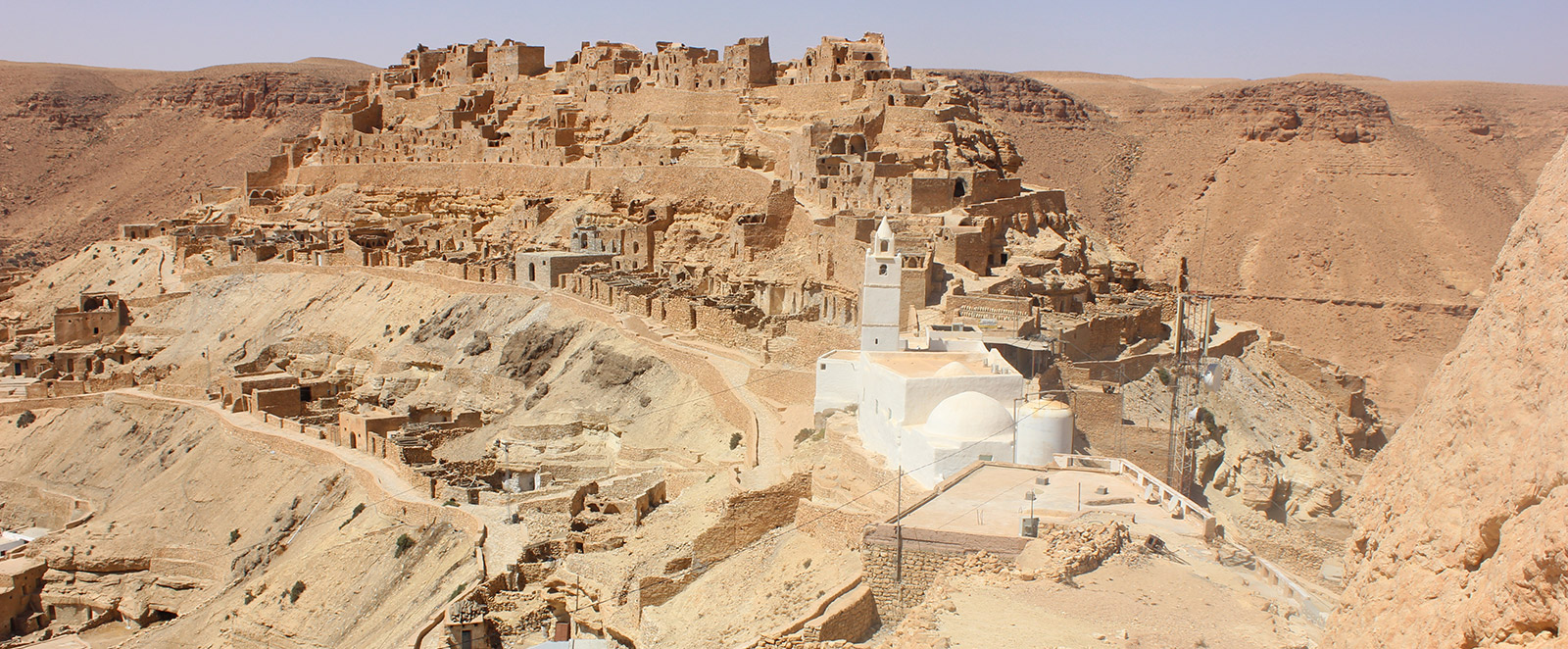
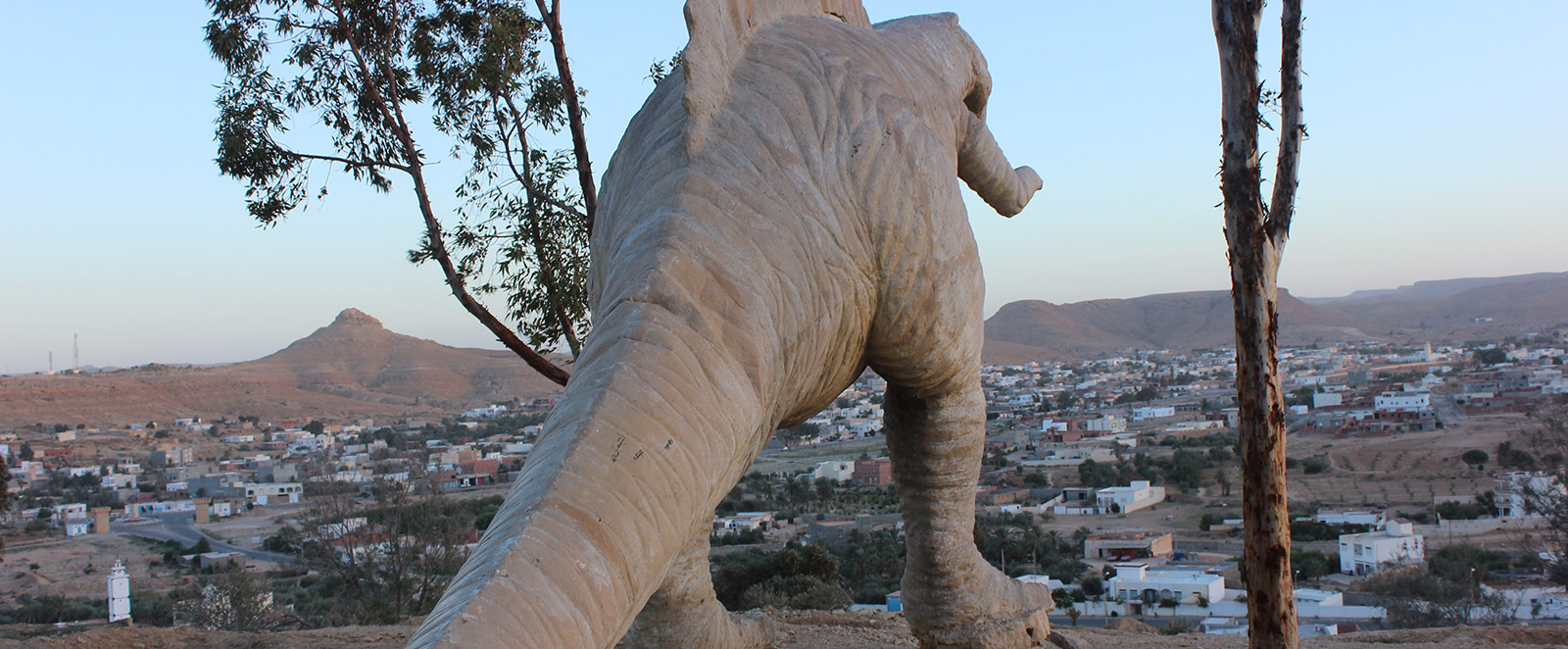
The Lower Jurassic and early Middle Jurassic (205 to 175 million years ago) are represented by the same gypsiferous series which, in the Tataouine graben, can reach a thickness of up to 1,000 meters. This is one of the most significant gypsiferous series known in the Earth's geological formations. Remarkable for its thickness and evaporitic nature, this series covers a time interval of about 40 million years (215 to 175 Ma) and marks the transition from the Triassic to the Jurassic.
Paleogeography and Paleo-environments: During this very long period, the Earth was subjected to extreme climatic conditions characterized by high heat and great aridity. These extreme conditions may explain the biodiversity crisis at the Triassic-Jurassic boundary, recognized as the second most significant crisis in Earth's geological history.
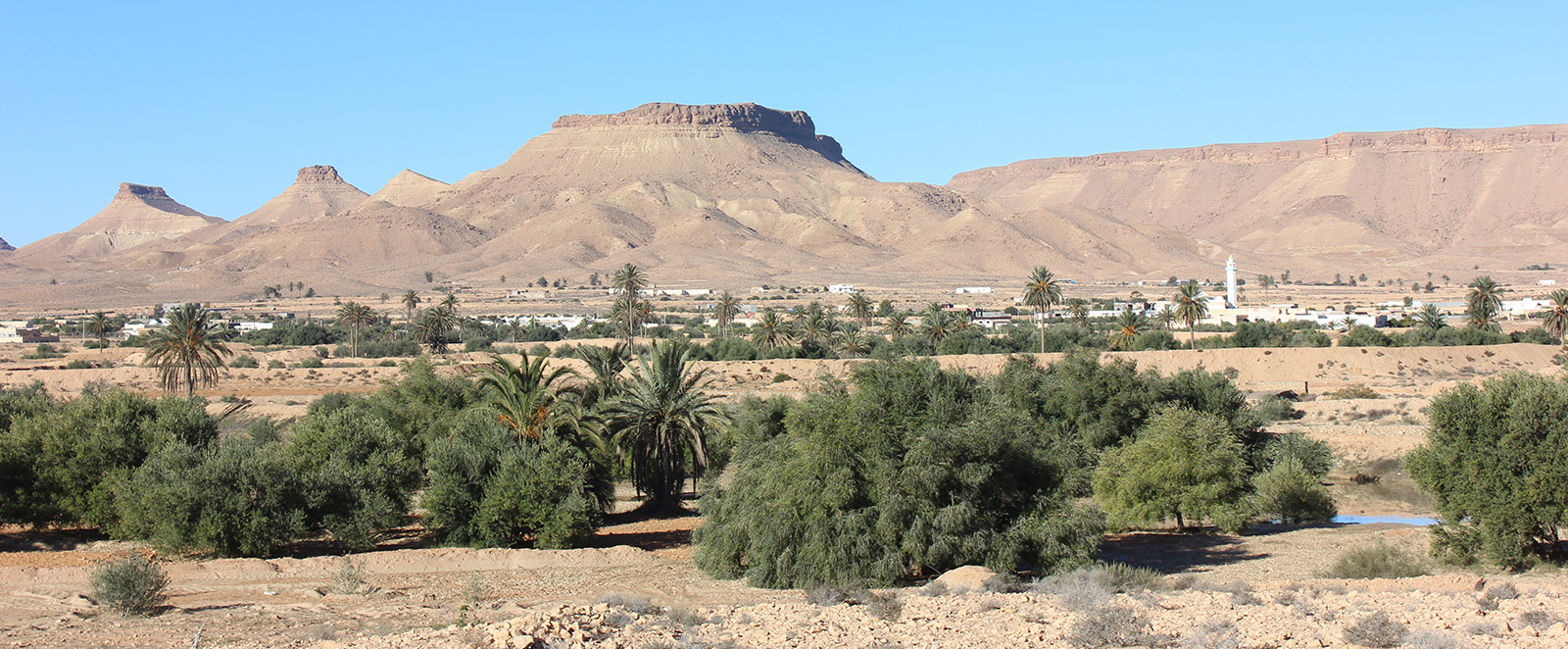
The Middle Jurassic and early Upper Jurassic (Bathonian to Lower Oxfordian) are represented in the Tataouine graben by the most fossiliferous geological formations of the Mesozoic. This consists of a series approximately 250 meters thick of alternating sands, marls, and limestones that have yielded a rich fauna of cephalopods (nautili and ammonites), echinoderms (sea lilies and sea urchins), brachiopods, bivalves, and gastropods. Several levels with continental influence, marking drops in sea level, contain plant and vertebrate remains and, in some cases, dinosaur footprints. A powerful (20 m) bar of massive reef limestone with sponges and corals, well-exposed at Jebel Tlalèt on both sides of the Wadi Ghomrassen valley, forms an important cliff and tops several mesas in the Tataouine region.
Paleogeography and Paleo-environments: During this interval, the Tataouine Graben formed a wide bay, subsided in the center and uplifted at the edges. Tethys waters stayed longer in this basin, and the water depth reached its maximum. Increasingly diversified fossils appear in the Middle to Upper Jurassic deposits. The abundance of sponges, corals, and bryozoans testifies to the tropical nature of the marine waters. True underwater meadows covered the floor of the Tethyan sea, and significant reef bioconstructions settled on underwater relief and colonized the Jurassic sea at the beginning of the Oxfordian.
The dry land, on the emerged edges of the bay, was also covered by fairly diversified vegetation marking hot and humid climatic conditions.
Upper Jurassic-Lower Cretaceous. Between the two carbonate layers forming the Upper Jurassic cliff at the base and the Upper Cretaceous cliff at the top, lies an important series (250 m) of sandstones, clays, and dolomites, covering the time interval from the Upper Oxfordian to the Lower Albian. This series marks the Jurassic-Cretaceous transition.
Paleogeography and Paleo-environments: Due to numerous phases of emersion and erosion, sedimentation was not continuous and contains several sedimentary gaps and unconformities.
The "Continental Intercalaire". Due to the detrital nature of its deposits and numerous sites with remains of vertebrate dinosaurs, crocodiles, turtles, and fish, as well as remains of coniferous plants and ferns preserved in volume and imprints, this series was long attributed to fluvial deposits in continental paleo-environments—hence the name "Continental Intercalaire." However, the presence of brachiopod, bivalve, and gastropod molds in the dolomitic levels and sedimentary features characteristic of tidal currents in the sandstones indicate a coastal marine environment. The most important water aquifers of the North Saharan Aquifer System (SASS) are housed in this series.