The Islamic period (from the seventh century)
The spread of Islam in North Africa took place through a succession of Arab conquests of Ifriqiya (modern-day Tunisia) over seventy years of fierce struggle (see map 1).
The first conquests began under the third Caliph Othman ibn Affan (643-655), notably those of Abdallah ibn Abi Sarh in 647, who won two successive victories over Byzantine armies in Tripoli (Libya) and Sbeitla (Tunisia). In 665, the first Umayyad Caliph (Muawiya Ibn Abi Sufyan) entrusted Muawiya ibn Hudayj al-Kindi with pursuing the conquest of Ifriqiya at the head of an army of ten thousand men who succeeded in conquering Sousse and Bizerte.
Later, other decisive campaigns followed, particularly those of Uqba ibn Nafi (in 670), who founded the first Islamic city in North Africa: Kairouan. He built the core of the city around a mosque that still bears his name today. To avoid the coastal zone held by the Byzantines, Uqba ibn Nafi used the caravan route connecting Kawar to Ghadames, then headed toward the interior of Ifriqiya across Nefoussa and the Dahar (South-East Tunisia).
After being recalled by the Caliph in the East, he did not return to Kairouan until 680 (under the second Umayyad Caliph Yazid) to continue the pacification campaign of Ifriqiya against the last pockets of Berber rebellion in the Tunisian Jerid region and the Algerian M’Zab. His conquests only stopped at the shores of the Atlantic Ocean in Morocco.
In 697, Hassan ibn al-Nu'man liberated Carthage from the last Roman army units entrenched in its fortresses, then in 698 he succeeded in defeating the famous Berber leader El Kahina.
Following this, Musa ibn Nusayr was appointed by the sixth Umayyad Caliph (Al-Walid) as the first governor of Ifriqiya; he conquered Morocco and delegated Tariq ibn Ziyad to conquer Andalusia (in 710).
Umayyad governors succeeded each other in Ifriqiya from 705 to 800, when Ibrahim ibn al-Aghlab founded the independent Aghlabid State (from Bejaia to Tripoli, with Kairouan as its capital). However, the new Aghlabid ruler maintained good relations with the Abbasid Caliph.
Under the Aghlabids (800-909), there were three caravan routes 1,500 to 2,000 miles long between Tunisia, Lake Chad, and Timbuktu, carrying a flourishing trade connecting the Mediterranean to Western Sudan.
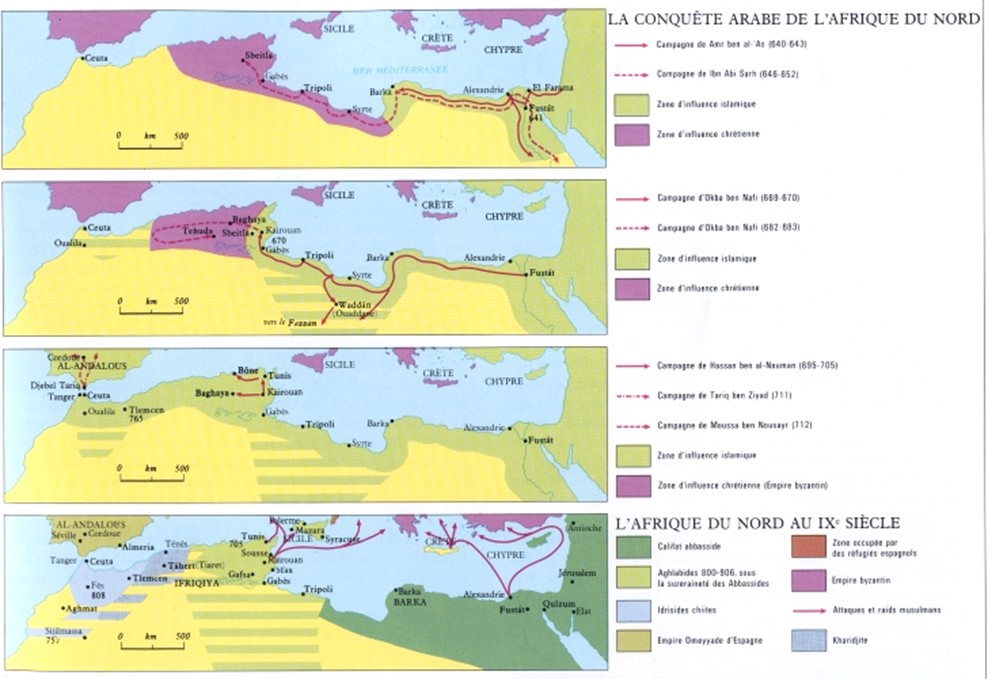 Map 1: Arab conquest of North Africa
At the same time, the Kharijite and Shiite schisms in the Central Maghreb (Algeria) and Western Maghreb (Morocco) followed the same caravan paths. Most Islamic dynasties: the Emirate of the Idrisids (788-921, Northern Morocco), the Emirate of the Banu Midrar (757-909, Southern Morocco), and the Emirate of the Rustamids (779-909, Algeria), were located along the North African caravan routes.
The Fatimids (Shiites) eventually conquered these Emirates in 909 and established the Fatimid Caliphate over almost the entire Maghreb, with Mahdia as its capital on the Tunisian coast (909-973) (see map 2). Descendants of the Kharijites are found today as Ibadis in Jabal Nefoussa (Libya), Djerba (Tunisia), and M’Zab (Algeria).
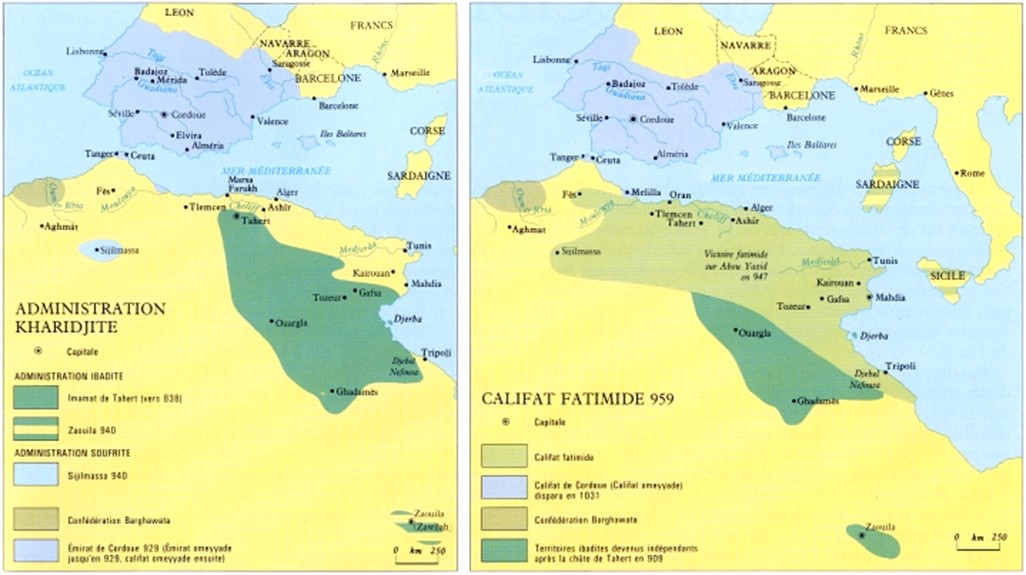 Map 2: The Maghreb from the era of the Kharijite Emirates to the Fatimids
The Zirid State (973-1160) established in Ifriqiya no longer recognized Fatimid authority (in 1045, Al-Muizz ibn Badis rejected Shiism and proclaimed allegiance to the Abbasid Caliph in Baghdad). In retaliation, it suffered assaults from the Hilalian tribes on its territory, sent on punitive expeditions by the Fatimid Caliph in Cairo, Al-Mustansir.
These Arab tribes migrated from Syria and Arabia. The Banu Hilal, soon followed by the Banu Sulaym, entered Ifriqiya in 1051. Following the Hilalian conquest, many local representatives of Zirid central power declared independence, such as in Gafsa, where governor Ibn al-Rand annexed the Jerid.
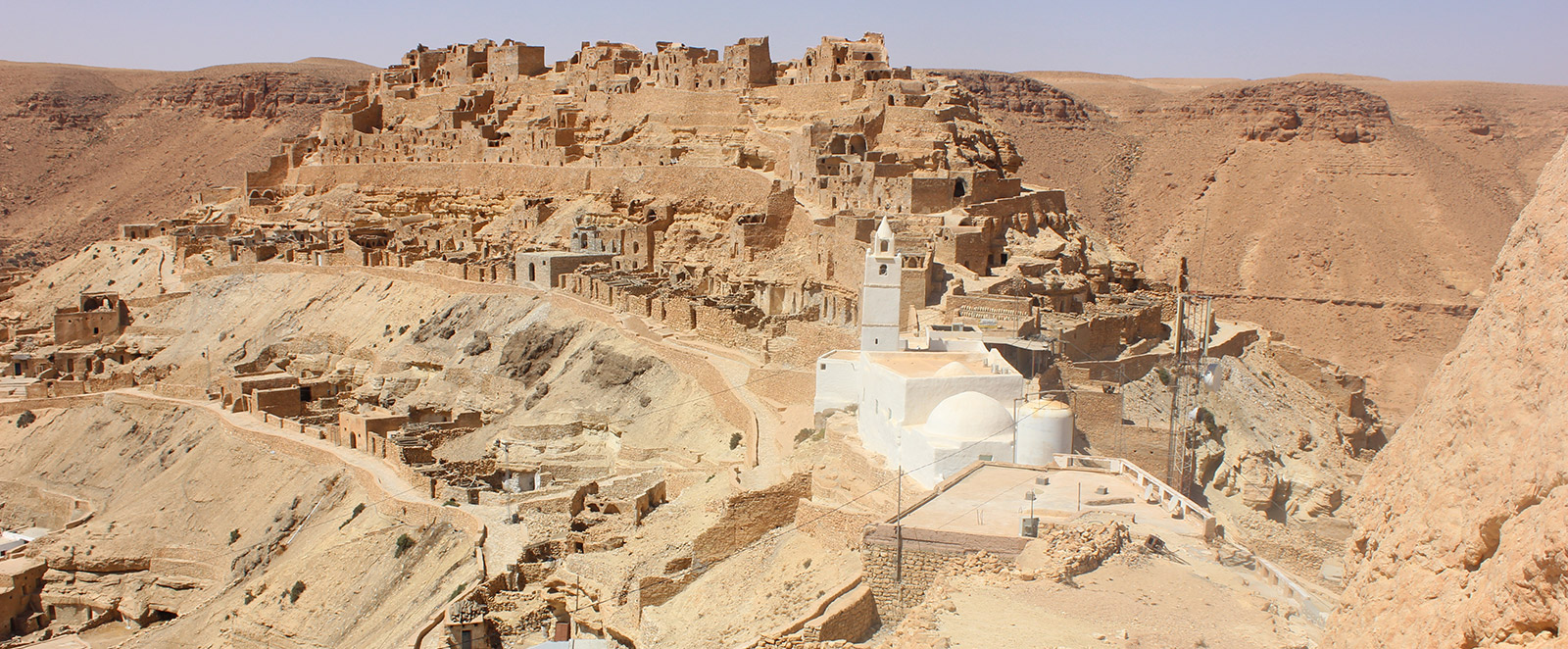
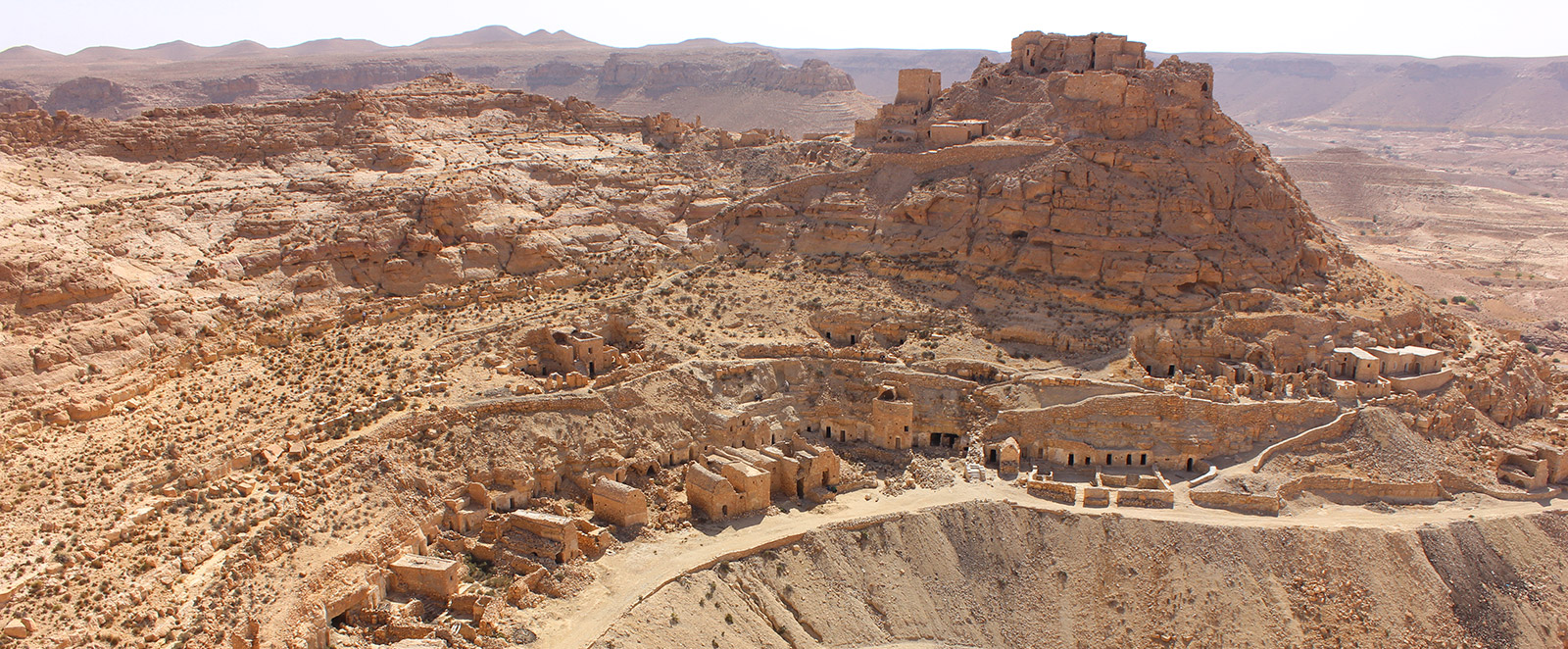
During this era, the Zenata (nomadic Berber tribes) built other relay stations on caravan paths in South-East Tunisia, including the famous Ksar El-Gdim in Maztouria (mountain Ksar in Tataouine), whose construction dates back to the 11th century with architecture reminiscent of Ribats or Khans. It was occupied by the Zenata leader: Khalifa Zenati.
The Almohad Emir, Abd al-Mu'min ibn Ali, ended this period of turmoil by reunifying the entire Maghreb under the Sunni banner in 1160.
Under the Almohads, caravan trade flourished. Ifriqiya's ports became destinations for Andalusian and European merchants (Catalans, Pisans, etc.), with Maghreb caravan cities (Sijilmassa, Ghadames, Tahert, etc.) acting as their primary suppliers of sub-Saharan products.
To this traditional North-South caravan transit in South-East Tunisia was added a growing East-West southern traffic: Muslim pilgrims traveling toward Mecca. The intersection of these two commercial and human transit lines necessarily took place in the Ouerguema country, heart of South-East Tunisia, making it a highly coveted strategic crossroads.
Oases scattered along these routes were the result of work by Ibadis and other Sufi religious sects who found safe refuge in the desert to preserve their faith while offering secure relays for trade between Ifriqiya and Sudan.
While the Almohad empire collapsed in Ifriqiya in 1228, the Hafsids (1228-1574) gained independence. At the same time, Yaghmurasen ibn Zayyan founded the Abdalwadid kingdom (1236-1554) in Tlemcen. In Fez, the Marinids displaced the last Almohads (1248).
In summary, the South-East Tunisian region remained under the control of Zenata Berber tribes from the 8th to the 11th century, passing later under the control of the Banu Hilal and then the Banu Sulaym from the 11th to the 16th century.
Bibliography
- Catherine Coquery-Vidrovitch and Gorges Laclavère (Eds.) 1988. Historical Atlas of Africa. Les Éditions du Jaguar, 174 pp.
- Georges Marçais. 1946. Muslim Barbary and the East in the Middle Ages. Paris: Aubier, 310 pp.
- Mohamed Hassen. 1999. Merchants and artisans in Ifriqiya between the 6th and 9th century of the Hegira.
- Gabriel Camps. 1983. How Barbary became the Arab Maghreb. Revue de l’Occident musulman et de la Méditerranée.